Our Dieties
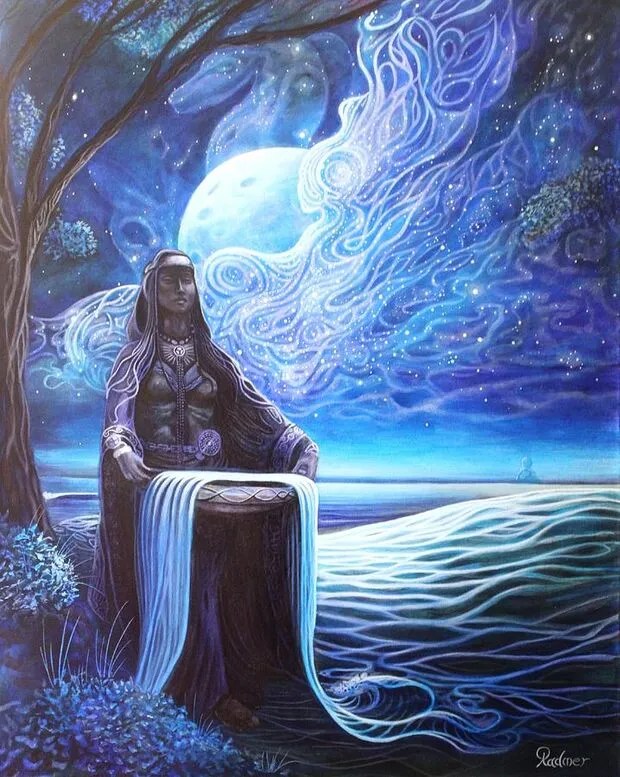
Donia meaning “dusky” as well as “the endowed one” She has parallels in the Irish tradition with “Danu” and is referred to in the Mabiginion as Dôn. (Art Credit: Radmer Lenasch) 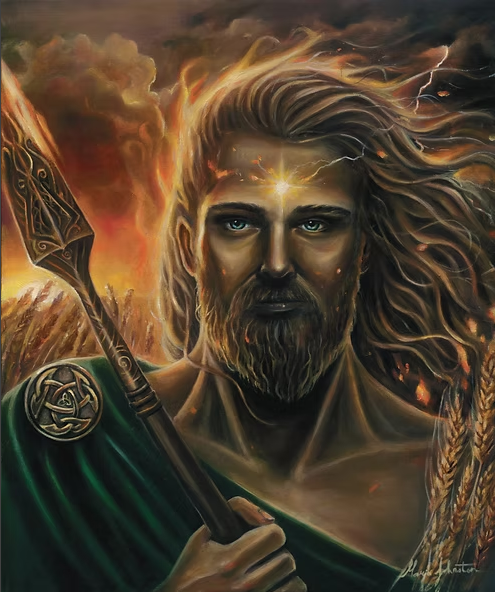
Llew is a diety of light, having parallels with Lugh Lamfada (Lugh of the Long Hands) in Irish tradition with his long hands referring to lightning bolts or the sun’s rays, depending on interpretation. The latter our tradition attributes to his “father” Taranis. In the Mabinogion, there is reference to Lleu Llaw Gyffes, which we consider one and the same, though by retelling and/or reincarnation. (Art Credit: Maria Johnston) 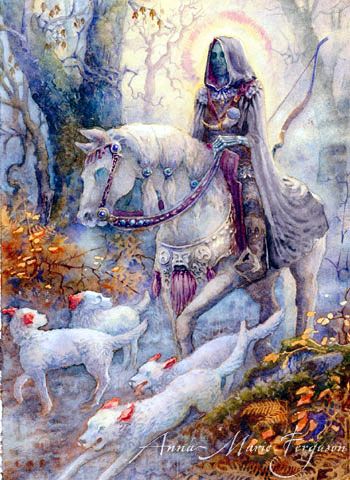
Arawn is lord of Annwn: the “Otherworld” and has domain over death and honorable vengeance. (Art Credit: Anna-Marie Ferguson) 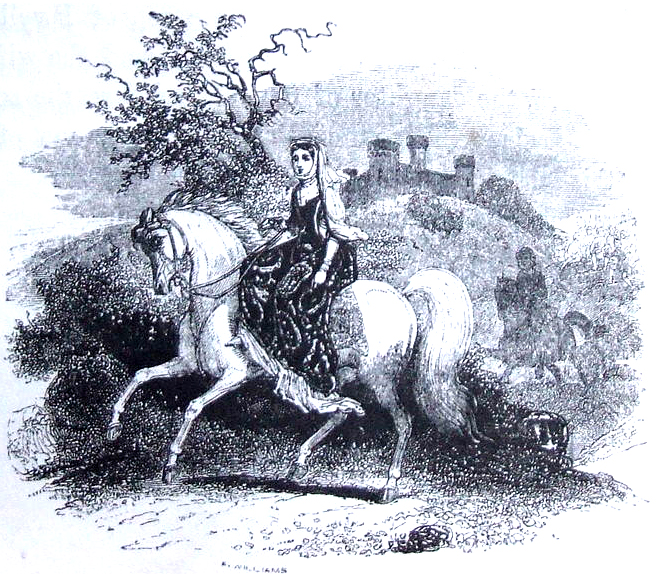
Rhiannon, as she appears in the Mabinogion. There she becomes wed to Pwyll, whom “trades places” with Arawn, Our tradition has a legend in which she is wed to Arawn directly. She is a liminal goddess, existing in both the living world and Annwn, comfortably exists atop a horse, etc. 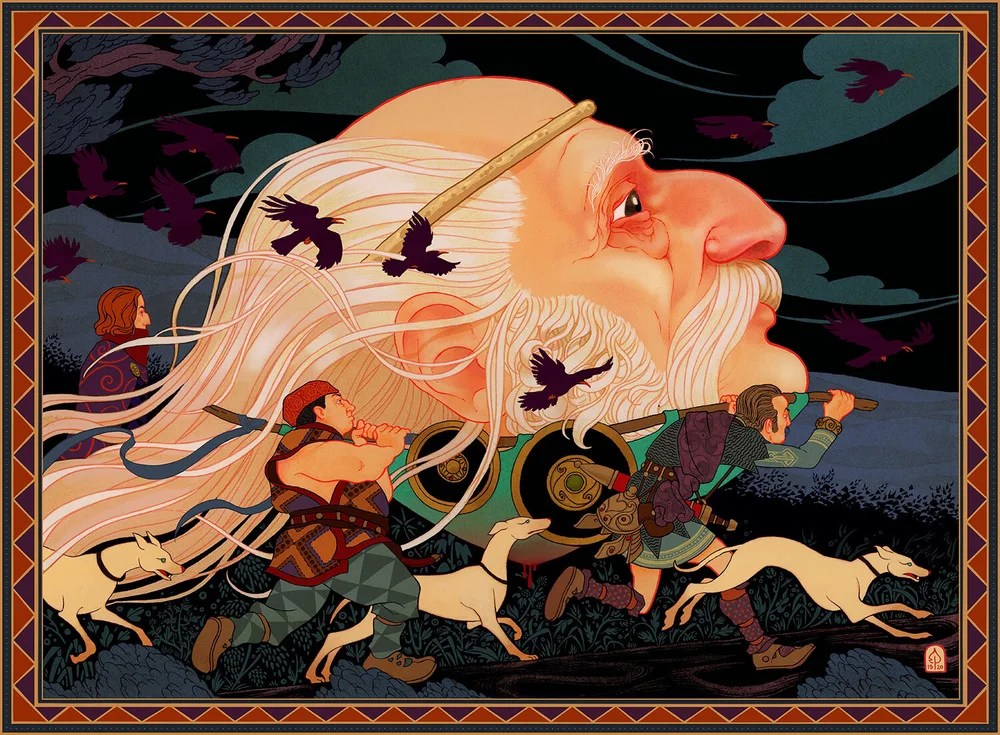
Brân Fendigaidd, literally the Blessed Crow, is regarded as a protector of the British Isles. A giant, he could wade into the sea and eliminate invading ships. Having sacrificed himself in a great battle, he asked that his head be buried facing the mainland, continuing to act as a guardian until King Arthur dug it up in defiant hubris, after which the Anglo Saxons invaded. The site of his heads burial is now the Tower of London, hence the presence of ravens. (Art Credit: Peter Diamond)
See Also: Who are Donia & Llew?
Origins & History
Our Tradition honors, celebrates, and practices the folkways from what is now Wales (Cymru, Cambria), as well as what is now England, Scotland, Ireland, Cornwall, the Isle of Man, and Breizh (Brittany, Northern France).
These areas were shaped by the introduction of waves of new peoples over time. Some of our customs may date back to the Stone Age, and most of our legends date back to the Bronze Age, but have been shaped by each group of people ever since.
The Iron Age Celts were an Indo-European group with ties to the Baltic Nations, Iberia (Spain), and possibly the Mediterranean. They inhabited the British Isles from approximately 500 BCE to 500 CE. (Their descendents are still around.) The Romans conquered the area around 43 BCE, and the legions departed around 400 CE. The Anglo Saxon tribes invaded shortly thereafter and founded what was to become England. There were also incursions by Norse, Danish, and other peoples, each of whom left their mark on the folkways of Britain.
All of these cultures struggled, intermarried, merged, and diversified, contributing folklore and traditions, some of which are still practiced – either as they were at introduction or are thought of today as secular or superstitions – and many have been revived or reconstructed.
The tradition was not well preserved by written tradition until recorded by Romanized clergy and later the Anglo-Norman British nobility. This led to a “Celtic Revival” in the late 18th and early 19th centuries. Legends of deities and hero tales were crafted into literature.
Values
Honor
In Welsh, this Wyneb meaning face a similar value in old Irish is Enech. It means putting your best face forward, facing your fears, saving face by acting honorably, facing the music, and being able to show your face proudly. In Cymraeg this is the quality of Anrhydedd the ability to act honorably, be truthful, and be stalwart. Actions that would make your ancestors proud of you and future generations admire you.
Honesty
Acting without deceit. Your word is your bond.
Being truthful to oneself as much as with others, knowing oneself. Not deluding oneself, facing reality. Seeking understanding and respecting the true nature of other people, animals, plants, spirits, and locations.
Courage
Rather than never being fearful, it is the overcoming of fears. Facing fears, being brave, being valorous, and acting in the best interest of oneself, one’s family, one’s society, and the natural world.
Hospitality
Giving food and shelter to those truly in need. This includes being helpful – such as giving directions, holding doors, helping to carry something – as well as attending to your elders, children, and infirm family. Assisting travelers. “Treading lightly” within the natural world. Facilitating good relations between people and beings.
This does not include enabling – One should strive to help others learn how to accomplish something themselves, not always see it done for them. Hospitality sometimes means knowing when another must stand on their own feet.
Loyalty
Honoring oaths, fulfilling vows. Being responsible and dependable.
Keeping one’s sacred word
Justice
In modern interpretation, this is equal rights for all people. Non-Aggression, but self-defense when warranted. All people have a voice. Protect and defend those who need it. Protect nature. Act judiciously.
Self-Sufficiency
Minimizing reliance on others. Contributing at least as much to society as one takes from it. Offering labor, goods, a service, or stewardship to one’s community. Caregiving for those dependent on oneself, especially family members. Strength and honor though work. Preparing for emergencies. Working with Nature.
See also our Article: Celtic Values