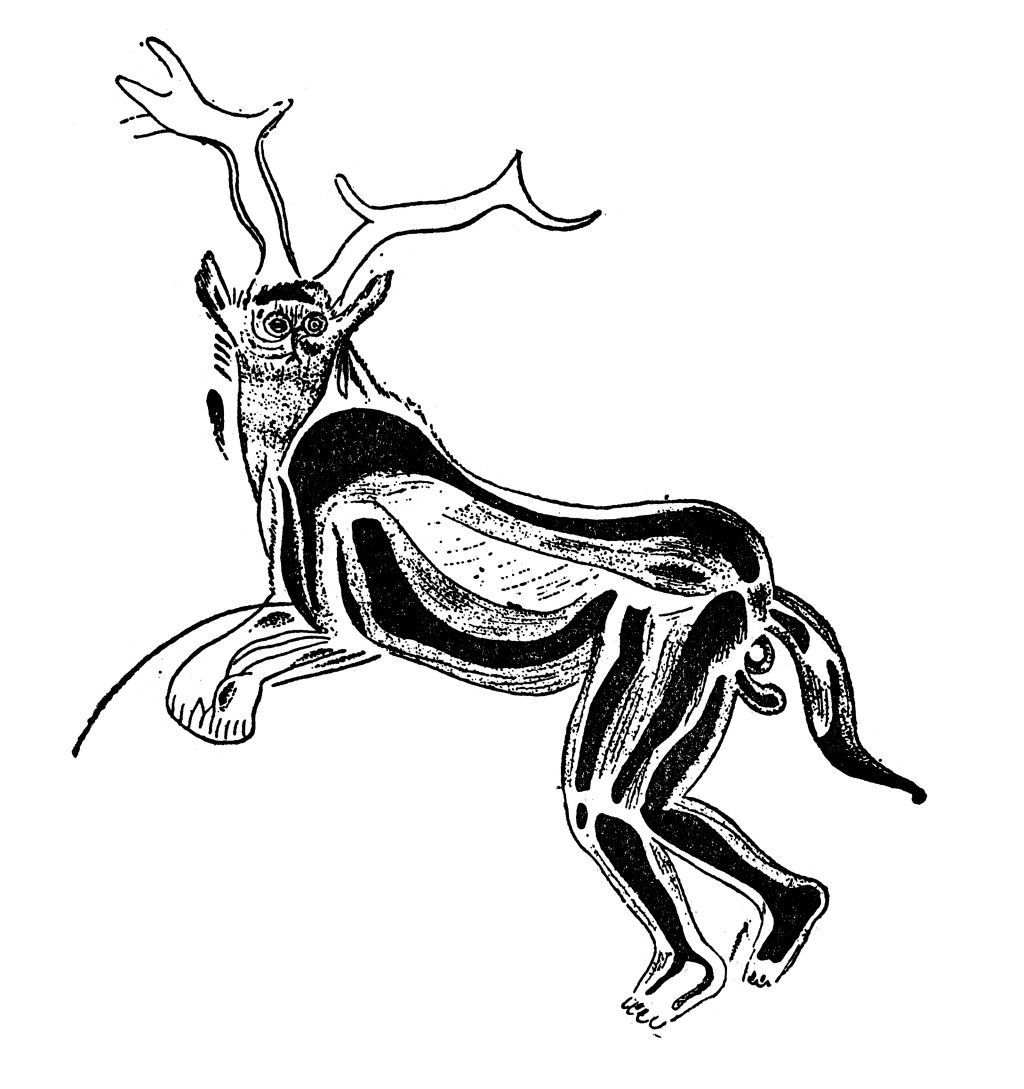
Definition: A Shaman is a person who connects to and interacts with Nature and the spiritual realms. The word is attributed to various languages, including Finno-Ugric, Tungusic, Evenki, Manchu, and / or Sanskrit. Shamanism is a type of Earth Religion or Nature Spirituality.
History: According to archeologists, the oldest known evidence of Shamanism dates back 20,000 years. Shamanic practitioners have appeared in nearly every culture, including the Abrahamic religions. Active tribal civilizations, including those in Africa, the American continent, Asia, Eastern Europe, and Oceana (Australia and New Zealand) have an unbroken line of Shamanic tradition. Shamanism is currently experiencing a world-wide resurgence.
Beliefs: Like many other Earth Religious or Nature Spirituality practitioners, a Shaman may believe in communication with spiritual beings or entities, including the spirits of nature, places, animals and plants, and the departed. The Shaman may seek attunement with the natural world. He or she may enter an altered state of consciousness to gain knowledge. This is sometimes called journeying, astral travel, vision questing or trance working. Divination through the use of symbolism may be performed. The Shaman may also do spiritual work for the purpose of healing the physical body.
How Shamanism is different from other Magio-Religions: While many Nature Religion practitioners use natural forces to create change according to their will, the Shaman is more interested in aligning with Nature, seeking balance and harmony. A Shaman may or may not believe in deities or entities such as Gods and Goddesses. Many Shamans believe in spirit guides, which might appear as an animal, but entities are not “summoned” or called.
Methods: Shamanic practitioners often use sound, rhythm, repetitive movement, gazing at an object such as a crystal or into a fire, singing or chanting, and dance to bring about an altered state of consciousness. During this dreamlike state, the Shaman may envision certain symbolic aspects of nature or the spiritual realm. A Shaman may communicate with natural beings or guides, or may simply gather information, while in the trance state. He or she may search out imbalances which are believed to cause illness. When returning to wakeful consciousness, the Shaman may act as an interpreter between the spirit realm / nature and humanity.
Some practitioners of Shamanism perform a healing rite called a “soul retrieval” for the purpose of reconnection with “lost” parts of the self, of alleviating traumas, and restoring the physical body to wholeness. Others may use a sweat lodge or sauna for purification and health.
Shamanic Drum Circle
The Drum Circle is a celebration held on or near the Full Moons. This is a time for introspection and reflection, when natural energies seem to be at their peak. Participants use sound, rhythm, movement, dance, singing, chanting and the light of a fire to attain “deeper” levels of consciousness than during a normal waking state. This is an opportunity to attune oneself to the natural world and the spiritual realm, to communicate with spirits, Nature and guides, and to seek images and symbols for the purposes of divination. Energy may be raised for personal use such as self-improvement, and / or directed toward enriching our Earth. Short inspirational readings can be offered between drum sessions. There may be a theme each month, based on the Native American and European names for each full moon.
This ceremony is a more light-hearted approach to a vision quest or journey. This is not a “controlled environment” such as a ritual Circle. Participants can come and go as they wish. Personal deities, spirits and guides may be called upon, but there is no overall summoning such as invoking deities or calling quarters. Offerings may be made. Participants are expected to respect others, including fellow humans, natural beings, and spiritual beings. Please also respect the shared drums and other musical instruments. While some silliness is bound to happen, such as funny chants and other “sacred clown” activities, it must not disrupt others’ spiritual journey. While altered states may occur naturally, no entheogens (substances such as alcohol or drugs) may be used during the Caer Drum Circle. As with any other Caer activity, we aspire to cause no harm.
Suggestions: Participants should be mindful of their physical body and use self-care, including drinking plenty of water to keep hydrated. Please bring a snack and water bottle. Since this event takes place at night in a Michigan swamp, insect repellant is a good idea. We have limited lawn chairs and drums to share. Participants may wish to “shield” themselves spiritually with prayers, a bubble of light, or talismanic objects such as a holy symbol or crystal. In addition, “anchoring” or securing part of the Self to the material world or physical plane is suggested. Some people may envision a silver cord attached to their body and tied to a physical object, such as their chair. Others use cues such as saying their own name aloud, touching the ground, and eating food or drinking water.
Slow, four-count drumming, like a heartbeat, connects us to Mother Earth. Lively rhythmic drumming with an odd number of beats can raise energy. Even-numbered beats can induce altered states. Fast “power-drumming” can bring participants back from the spirit realm to the material plane. One drummer may “set the beat” that others can follow, while more experienced drummers may produce a counter-beat, like harmony in song. Participants may wish to discuss their experiences and visions after the drumming.
- January: Wolf moon, old moon, ice moon
- February: Snow moon, hunger moon
- March: Worm moon, sap moon, hare moon
- April: Pink moon, grass moon, fish moon
- May: Flower moon, planting moon, milk moon
- June: Strawberry moon, rose moon , oak moon
- July: Buck moon, hay moon, thunder moon
- August: Sturgeon moon, grain moon
- September: Harvest moon, corn moon
- October: Hunt moon, travel moon
- November: Beaver moon, frost moon
- December: Cold moon, holly moon



Leave a Reply